
BUSINESS
Oman Postpones Hormuz Talks as the Saudi Bypass Shuts
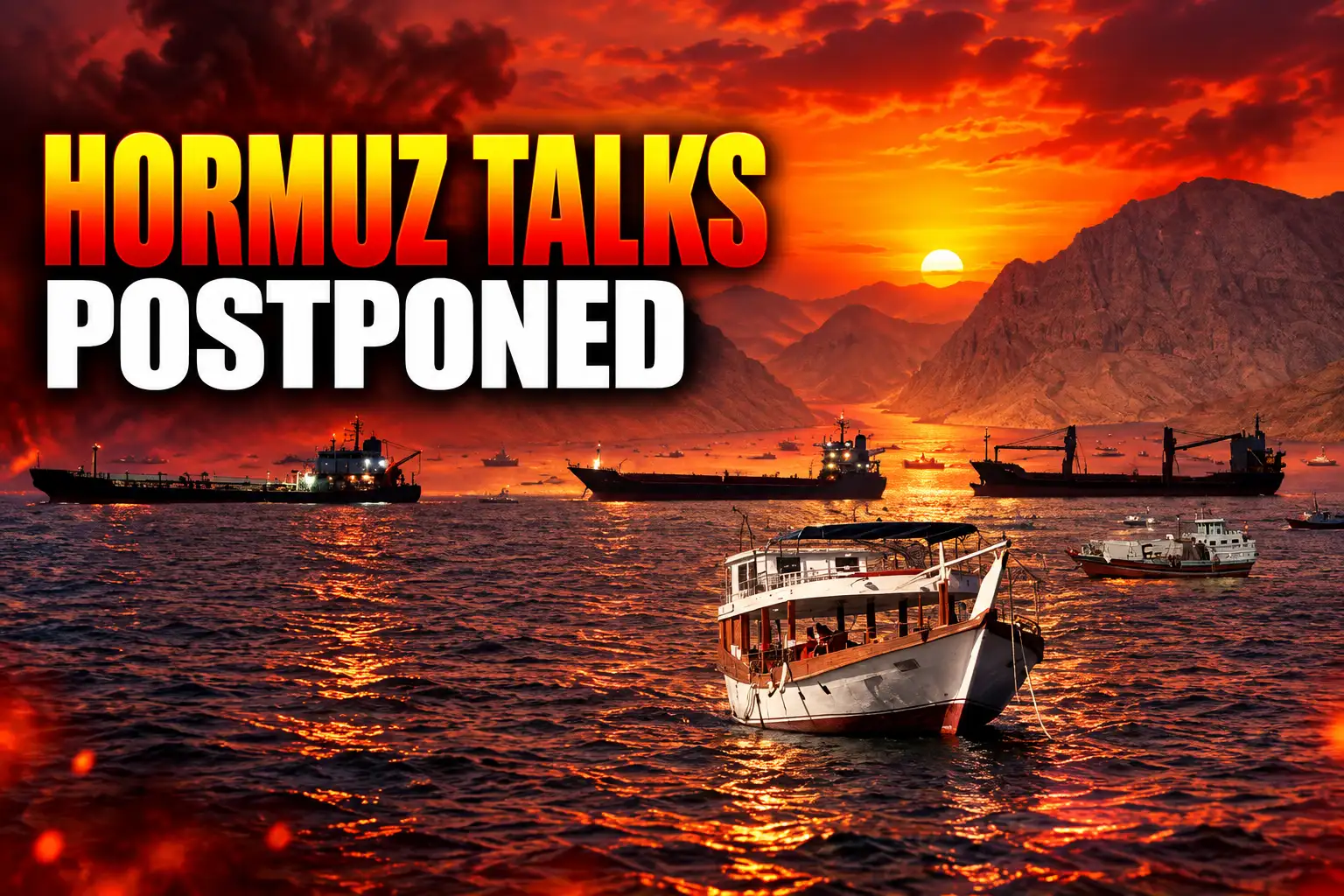
Oman delayed Salalah talks on the Strait of Hormuz after Bahrain refused to attend and Saudi Arabia shut its East-West bypass pipeline.

Omani Foreign Minister Badr Albusaidi postponed a September 14 meeting in Salalah on the Strait of Hormuz after he said the region still lacked agreement. Gulf diplomats and Iranian officials had been due to sit without the United States, which has spent months escorting tankers and does not want that file opened.
The gathering fell apart the same weekend Saudi Arabia shut the East-West pipeline, the main land route around the strait, after drones launched from Iraq struck it. That left US Navy cover as the path that still moves oil, and a closed waterway as the path Iran still wants to trade on.
Iran’s Maps Would Have Kept the Strait Closed
Albusaidi wrote on September 13 that the Salalah session was put off “in the interests of consensus,” and that Oman still wanted talks that support stability in the region. His post listed Bahrain, Iran, Iraq, Kuwait, Oman, Qatar, Saudi Arabia, and the United Arab Emirates.
https://x.com/badralbusaidi/status/2099224052619735498
Mohammad Ali Bek, director general of the Iranian Foreign Ministry’s Persian Gulf Department, said some regional countries had asked for the delay and that Tehran and Muscat had agreed together. Iran would work with Oman on a new date, he said. The Oman News Agency said the aim was to create conditions for a useful dialogue.
The session was billed as the first time the six Gulf Cooperation Council foreign ministers would sit as a group with a senior Iranian official since the United States and Israel opened the war on February 28. What Iran meant to put on the table was narrower than a reopening.
Iranian Foreign Minister Abbas Araghchi said countries due in Salalah were to receive details and maps of an Iran-Oman deal on new entry and exit routes. He had already said an understanding with Oman would not mean the waterway would reopen. Iranian media described ships entering the Gulf through Iranian waters, with part of the exit also in Iranian waters, and said the plan would close the southern corridor Washington has been pushing.
WHAT THE MAPS WERE FOR
- The brief: Gulf states and Iraq were to be shown Iran-Oman routes, not asked to reopen Hormuz on pre-war terms.
- The lanes: Iranian accounts said inbound traffic would run in Iranian waters, under Iranian arrangements.
- The southern track: The US-backed corridor along the Omani coast would have been treated as off the map.
- Still unconfirmed: Riyadh has not said it asked Muscat to delay, even after a regional journalist pointed at Saudi Arabia following the pipeline strikes.
- Still unconfirmed: No public text of the Iran-Oman route deal has been released.
- Still unconfirmed: How long the East-West line stays shut, and how much pumping gear was burned.
A meeting sold as a first step on the strait was, on Iran’s own wording, a briefing on lanes through water Tehran already claims, while the strait itself stayed closed. That is a weak basis for consensus even before anyone argues about money.
Bahrain Refused the Table Over Fees and Permits
Bahrain spoke before Albusaidi did. On Saturday the Bahraini Foreign Ministry said the kingdom would not join a collective meeting that included Iran until diplomatic ties were restored. Manama cut those ties in 2016, when Saudi Arabia did; Riyadh restored them in 2023, and Bahrain has not.
The ministry said security in the Gulf “cannot be preserved through a policy of appeasement.” It called for Hormuz to be open without “discrimination, fees or permits.” Bahrain holds the rotating GCC presidency and has taken repeated Iranian strikes during the war, which made a no-show more than a protocol spat.
Albusaidi still put Bahrain’s flag in the postponement post. The empty chair was already priced in.
Two days earlier Saudi Arabia had lost the workaround that made a slow diplomatic track look tolerable. The Energy Ministry said the East-West pipeline was stopped as a precaution after drones from Iraq hit the line in the Riyadh and Medina regions on September 10, causing injuries and damage. The Foreign Ministry said it would not respond at this stage, after Iraq’s prime minister asked for time to stop attacks from Iraqi territory.
The line runs about 1,200 km from Abqaiq, near the Gulf fields, to Yanbu on the Red Sea. Its design capacity is 5 million barrels a day. During the war it had been moving 4 million to 5 million barrels a day of crude that no longer went through Hormuz. Satellite images showed fires at pumping sites. Repair time has not been given.
On September 13 the United Kingdom Maritime Trade Operations said a vessel was struck in the strait, caught fire, and had its crew taken off. Brent crude, the international benchmark, traded at $107.87 a barrel that evening, with US crude at $102.87, after a spike near $110 on September 11 when the pipeline news hit.
FROM STRIKES TO A DARK BYPASS
- February 28, 2026: The United States and Israel launch strikes on Iran, and Tehran throttles traffic through Hormuz.
- June 2026: A US-Iran accord falters over how the strait would be run.
- July 28, 2026: Oman presents Iran with a Gulf-backed plan for joint management and voluntary payments, not mandatory tolls.
- September 11, 2026: Saudi Arabia shuts the East-West pipeline after drones from Iraq hit it.
- September 13, 2026: Albusaidi postpones the Salalah meeting; Bahrain has already said it will not come.
Oil desks treated that sequence as one story. A closed strait is a known risk. A closed strait plus a dark bypass, on the day the diplomatic meeting dies, is a thinner buffer.
WHY SALALAH DID NOT OPEN
- Bahrain’s terms: No sitting with Iran until ties resume, and no fees or permits on the waterway.
- Saudi’s week: The kingdom’s main Hormuz bypass was hit and shut before ministers were due in Oman.
- Iran’s maps: Araghchi said an Oman deal would not reopen the strait.
- The fee fight: Gulf states will look at voluntary safety payments and still reject a toll that pays Tehran.
- The empty superpower: Washington was not coming, and still claims it is the only party that can keep the lane usable.
Any one of those could have slowed the session. Together they made a foreign ministers’ photocall look like a trap.
The Malacca Copy on the Table in Salalah
For months Oman has tried to split a legal hair. Iran wants to run the strait with Oman and charge for the service. The United States says a mandatory fee on an international strait is illegal and would spread. Muscat’s answer is a copy of the Malacca and Singapore model: no toll for passage, voluntary money for lights, charts, spill response, and rescue.
Oman’s delegation told the International Maritime Organization’s council in July that it does not support transit fees on Hormuz and that voluntary arrangements for navigational support are worth exploring. Albusaidi has drawn the same line in public, saying compulsory charges are not under discussion and pointing to Malacca and the waters around Singapore as the pattern.
The IMO describes a Cooperative Mechanism launched in 2007 among Indonesia, Malaysia, and Singapore, with user states chipping in on a voluntary basis, in line with UNCLOS Article 43 on sharing the cost of safety aids. That is the polite version of a fee. It is also a long way from a per-ship charge that would flow to Iran.
In straits referred to in article 37, all ships and aircraft enjoy the right of transit passage, which shall not be impeded.
United Nations Convention on the Law of the Sea, Article 38
Part III of the convention, the section on straits used for international navigation, also says bordering states shall not hamper transit and that transit passage shall not be impeded. There shall be no suspension of that right. Neither Iran nor the United States is a party to the convention, but Oman is, and Hormuz is treated in practice as an international strait.
The political problem is that a voluntary fund raises little unless the big users pay, and Iran has talked about control of the lanes, not about a shared pot for buoys. Bahrain’s phrase, “fees or permits,” was aimed at that gap. A permit is how a closed strait stays closed even if the invoice is labelled a service.
Why Washington Would Not Sit in Salalah
The Trump administration did not try to kill the meeting in public. A US official said Washington was in close touch with regional partners “before, during, and after the meeting,” and that “Iran does not control the Strait of Hormuz and never will.” The same official said the United States does not want to talk about the strait and will talk only if the nuclear file is on the table.
President Donald Trump has been blunter about why that posture suits him.
I’m not trying to force Iran to the bargaining table. I like our position now much better, with almost total control of the Hormuz Strait, and their economy totally collapsing.
Donald Trump, Truth Social
Vice President JD Vance said last week that the United States is “the only country in the world that can ensure” control over the strait. Treasury Secretary Scott Bessent has gone further, saying the waterway will become “like a worthless piece of water” within two years as other routes are built out.
Iranian officials have told regional players the reverse order: nuclear talks with Washington, including any lift of the US blockade, wait on the strait. So the American line, nuclear first, is also a way of not starting. The Salalah session was the Gulf’s attempt to move the waterway file without that veto. It still needed Saudi buy-in, Bahrain in the room, and a text that did not look like a new legal order. It had none of the three.
US officials have reviewed Oman’s drafts and have not signed them. They also concede, privately, that a regional plan is needed because a Navy escort run is not a permanent shipping code. That tension is the irony, and it did not get resolved by cancelling Monday.
Nearly 20 Million Barrels Still Need One Door
Bessent’s two-year forecast runs into the plumbing. The International Energy Agency puts the strait at 21 nautical miles at its narrowest, with two-mile inbound and outbound lanes and a two-mile buffer. In 2025, nearly 20 million barrels a day of crude and products moved through it, about 25% of seaborne oil trade, and about 80% of that oil was headed to Asia.
The US Energy Information Administration counted 20 million barrels a day in 2024, about 20% of world petroleum liquids use, more than a quarter of seaborne oil trade, and about one-fifth of global liquefied natural gas trade, mostly from Qatar. In 2024, 84% of the crude and condensate that used Hormuz went to Asia. The United States took about 0.5 million barrels a day through the strait that year, 7% of US crude imports.
Iraq, Kuwait, Qatar, Bahrain, and Iran have no serious independent way out. Saudi Arabia and the UAE do. The IEA’s last full-year snapshot, for 2025, is the baseline the war then cut into.
2025 OIL THROUGH HORMUZ, IEA
| Origin | Crude and condensates (mb/d) | Products (mb/d) | Total (mb/d) |
|---|---|---|---|
| Saudi Arabia | 5.43 | 0.80 | 6.23 |
| Iraq | 3.32 | 0.31 | 3.63 |
| United Arab Emirates | 2.02 | 1.22 | 3.24 |
| Iran | 1.69 | 0.72 | 2.41 |
| Kuwait | 1.40 | 0.97 | 2.37 |
| Qatar | 0.73 | 0.69 | 1.43 |
| Saudi-Kuwaiti Neutral Zone | 0.35 | 0.00 | 0.35 |
| Bahrain | 0.00 | 0.21 | 0.21 |
| Total | 14.95 | 4.93 | 19.87 |
Those are 2025 volumes. Energy Secretary Chris Wright said on September 11 that just under 11 million barrels of oil a day were moving through the strait on a seven-day average, up from the 9 million barrels a day he had cited days earlier, and still well below the 2025 run rate. The IEA had put spare bypass capacity on the Saudi and UAE pipes at 3.5 to 5.5 million barrels a day. A large share of that spare was the East-West line, which is now offline.
The UAE’s Habshan-Fujairah line, about 1.8 million barrels a day of capacity, still offers a Gulf of Oman outlet that skips Hormuz. It does not replace a 5 million barrel Saudi artery, and it does not carry Qatari gas. Houthi pressure on the Red Sea, the other door for Yanbu cargoes, makes the same point from the other end. A bypass that dumps oil into a second threatened strait is not a full substitute.
Two Daily Windows for a Navy Escort
Washington’s working answer is not a legal text. It is a convoy.
Capt. Tim Hawkins, a Central Command spokesman, said the US military has helped about 1,600 vessels and more than 800 million barrels of crude through the strait since early May. Officials have said the Navy has escorted as many as 40 commercial vessels on a given day. Independent trackers using AIS beacons have often counted far fewer visible transits, in the low teens, in part because some ships sail dark.
THE ESCORT RUN IN FIGURES
- Since early May: About 1,600 commercial vessels assisted, and more than 800 million barrels of crude moved, per CentCom.
- Recent flow: Just under 11 million barrels a day on Wright’s seven-day average as of September 11.
- Peak cover: As many as 40 commercial ships escorted in a single day, per US officials.
- The clock: US shipping guidance in early September shifted to two recommended transit windows a day, rather than a broad overnight slot.
The Naval Cooperation and Guidance for Shipping cell told captains that recommended times now vary by day and that night transits have not been the safest. Ships are not required to go in those windows, but they are told that is when US cover is thickest. That is a rationing of air defense, not a sign the threat has gone.
Commercial ships are still being hit. The Sunday strike logged by UKMTO landed in the same 24 hours as the postponement. The escort mission can raise the number of hulls that get through. It cannot write a rule that Iran accepts, and it cannot run forever at the present tempo without crowding out other jobs in the same theater.
That is why Gulf diplomats kept working on a text even when they knew Washington would not sit in Salalah. It is also why a cancelled meeting is not a small scheduling slip. If the Navy is the only opener, and the Navy is already shortening the day, the region is living on a timetable it does not control.
Tehran Ties Nuclear Talks to an Open Strait
The nuclear file is the one Washington says it will discuss. Iranian officials have told counterparts in the Gulf they will come to that table when the strait is settled, including the US blockade. Postpone the regional meeting, and you postpone the only on-ramp Tehran has named.
A June understanding between Washington and Tehran already broke on this point. Oman was written into that earlier text as the party to help define future administration and maritime services, in line with international law. The July voluntary-fee paper was the follow-up. Salalah was supposed to be the moment Gulf capitals looked at the maps and, at least tacitly, did not walk out.
Bahrain walked before the door opened. Saudi Arabia spent the weekend on a burning pipeline. Iran said the waterway would stay closed anyway. The United States said the only conversation it wants is enrichment, stockpiles, and missiles.
Albusaidi said Oman remains committed to dialogue. Bek said a new date will be set with Muscat. Until that date exists, tankers that move will move under US cover, through a strait Iran has not agreed to open, past a pipeline that is not pumping.

America Exports Spare Diesel as Pump Prices Hit Records

Google Pulls the Pixel Tablet After a 14-Year Cycle

Open Cosmos Takes €300 Million From Security-Minded Backers

Googlebook Pre-Orders Open as Five PC Makers Carry the Launch

Oman Postpones Hormuz Talks as the Saudi Bypass Shuts

Long Realty Drops Lundeen After the Flight 618 Arrest

Land Rover Pushes the Electric Defender Into the 2030s

OPEC+ Holds October Oil Output After Six Paper Hikes

Boox Picco Drops Phone Magnets for a Pocket Linux Reader

Kalshi Asks 11 Judges to Undo a Sports-Swap Split
-
 BUSINESS4 weeks ago
Long Realty Drops Lundeen After the Flight 618 Arrest
-
 AUTO1 month ago
Land Rover Pushes the Electric Defender Into the 2030s
-
 BUSINESS4 weeks ago
OPEC+ Holds October Oil Output After Six Paper Hikes
-
 NEWS4 weeks ago
Boox Picco Drops Phone Magnets for a Pocket Linux Reader
-
 GAMING3 weeks ago
Kalshi Asks 11 Judges to Undo a Sports-Swap Split
-

 LIFESTYLE3 years ago
American Eagle Style Number on Tag – Decoding Clothing Label Information
-

 TECHNOLOGY3 years ago
Why Was My Amazon Order Cancelled – Understanding Order Cancellation Reasons
-

 LIFESTYLE3 years ago
How to Get Signed by Atlantic Records – Pursuing Record Deals with Major Labels