
LIFESTYLE
How to Extend Door Latch: Fixes for a Door That Bounces
How to extend door latch starts with the bolt mark: tighten the hinges, file a miss of 1/8 inch or less, and fit a longer lip when the trim blocks the bolt.

You shut the door and it bounces open, or you have to lift the handle before the latch will click. You want to extend door latch reach so the bolt ends inside the strike plate. The door looks closed and the bolt never caught.
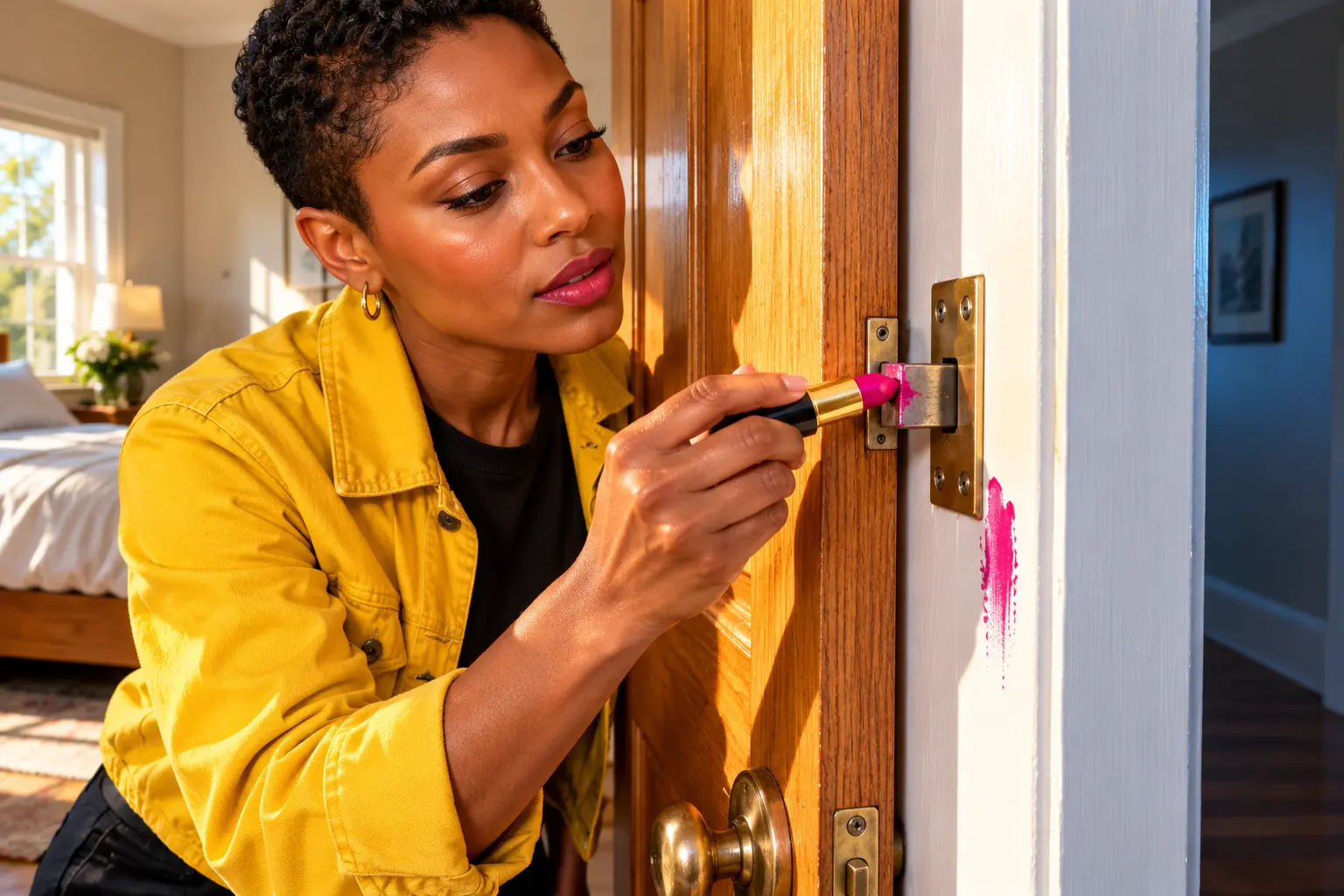
Height, depth, and lip length are the three misses, and each one needs a different tool. A smear of lipstick or chalk on the bolt shows which miss you have. Hinges come before any filing, and a longer lip is only for trim the bolt is already hitting.
Three Reasons a Door Latch Misses
The latch bolt is the spring-loaded piece on the edge of the door, and the strike plate is the metal receiver screwed to the jamb. When the two do not meet, the handle feels fine in your hand and the door still will not stay shut. Treating every miss as one job is how a file comes out before anyone checks the hinges.
A high or low bolt, a bolt that falls short, and a lip that stops on the casing each ask for a different first move. Match what the door is doing to that move before you take a screw out.
| What the door does | What is off | First move |
|---|---|---|
| Bolt hits above or below the opening | Height | Tighten the hinges, then mark again |
| You must lift the handle to latch | Door has dropped | A 3-inch screw in the top hinge |
| Door closes but rattles | Plate too far from the stop, or a flat tab | Bend the tab or move the plate toward the stop |
| Door latches, then pushes open | Small bolt is in the opening | Move the strike so the small bolt hits metal |
| Mark is in the hole, door still will not hold | Depth | Deepen the pocket or move the plate toward the door |
| Bolt scars the casing | Lip is too short | Fit an extended lip strike |
| Catches by hand, not on a swing | Closer speed | Adjust the closer and leave the plate |
| Catches in one season, misses in another | Frame or door moved | Check hinge screws and frame fixings |
A deadbolt follows the same split. Throw it with the door open, mark the end, and read its own strike. Two locks that miss in different directions are two plates. Two locks that miss the same way are one door that has moved.
Once the symptom has a direction, the bolt should leave a mark you can measure.
How to Mark Where the Latch Hits
WHAT TO SET OUT
- Color: Lipstick, chalk, or a marker, plus masking tape if the strike is dark.
- Drivers: A screwdriver, a drill, and a 3-inch wood screw for the hinge.
- Cutting: A half-round metal file, a vise, a sharp chisel, and a hammer.
- Patching: Wood filler, wood glue, and a few toothpicks for a stripped hole.
The mark only helps if you close the door the way you do on a normal day. Lifting the handle while you test hides the sag you are trying to find.
- Open the door and rub the color across the end of the latch bolt. For a deadbolt, throw the bolt first, then mark the end.
- Stick masking tape over the strike opening so a light smear shows on a dark plate.
- Close the door normally, let the bolt touch the plate, then open the door and read the smear.
A mark above the opening means the latch sits higher than the plate. A mark below it means the latch sits lower. Color on the lip, toward the stop, means the door is not reaching the stop. Color inside the opening, with the door still loose, means the bolt finds the hole and does not enter far enough. A clean plate on a door that rattles points to a strike that sits too far out, so the bolt never presses the plate.
Keep that reading while the screws are still untouched. A low mark is a hinge problem until the hinges prove otherwise.
Fix a High or Low Latch at the Hinges
Open the door and try every hinge screw with a screwdriver, on the jamb leaf and the door leaf. A loose top hinge lets the latch side drop, so the bolt arrives low and skids on the plate. Tightening those screws is the first repair to try, and it solves a door whose only fault is a loose top hinge.
If the screws are already tight and the mark is still high or low, replace one screw on the jamb side with a 3-inch screw. The long screw reaches the wall framing and pulls the jamb toward the stud a little. At the top hinge, that pull raises the latch. At the bottom hinge, it lowers the latch. Drive one screw, close the door, and read the mark again before you add another.
A screw that spins has lost its wood. Dip wooden toothpicks in wood glue, pack them into the hole, snap them flush, and drive the screw back in. A hole that is badly blown out needs a glued wood plug and a fresh pilot instead of more toothpicks in the same fluff. Putting the same short screw back into an enlarged hole is the version of this repair that comes loose again.
Test the door from a normal swing after the hinges are done. If the bolt now hits the opening, stop there. If it still misses, the plate is next, and the mark tells you how far.
File or Move the Strike Plate
Measure from the center of the lipstick or chalk mark to the center of the strike opening. That distance decides whether you remove metal or move the plate.
THE 1/8 INCH LINE
- Small miss: A gap of 1/8 inch or less, high or low, is a filing job on a door that is not fire rated.
- Large miss: Anything over 1/8 inch needs the plate moved, because a wider hole weakens the strike and leaves a sloppy fit.
- Short reach: A bolt that is already centered but does not go in far enough needs the plate moved in or out, not a bigger opening.
You can take more metal off on the next pass, and you cannot put that metal back. File a little, hang the plate, and close the door before you cut again.
Filing a Miss of 1/8 Inch or Less
- Remove the screws and take the strike plate off the jamb.
- Clamp the plate in a vise with a cloth on the jaws so the file does not scar the finish.
- Use a half-round file, which follows the curve of the latch hole, and take metal off the edge the mark touched.
- Screw the plate back on, close the door, and file again only if the bolt still clips that edge.
Stop when the bolt enters without a scrape and the door does not rattle. Filing all the way around the opening removes the edges that keep the bolt from rattling.
Moving a Strike Plate That Sits Too Far Off
A miss larger than 1/8 inch, or a bolt that is at the right height and still will not enter, means the mortise has to move with the plate.
- Unscrew the plate and hold it where the mark says it should sit: up, down, toward the stop, or toward the door.
- Score that outline with a utility knife and pare the mortise with a sharp chisel so the plate sits flush with the jamb, not proud of it.
- Drill 1/16 inch pilot holes in the new screw spots, then drive the screws and test the door.
- Fill the old screw holes and the empty part of the old mortise with wood filler. Take the plate off again if you need to sand or paint the patch.
A plate that sits proud catches the door on every close and bends the lip. Flush is the fit you want, even when the old mortise was cut deeper than the metal. If the hinges are right and the bolt still falls short, or if the bolt is chewing the trim, filing is finished.
How to Extend a Strike Lip or Deepen the Pocket
Two hardware changes get called an extension, and they close different gaps. An extended lip strike has a longer curved tongue so the bolt slides over thick casing instead of denting it. A deeper pocket behind the plate gives a bolt that already finds the hole somewhere to go. Pick the part that matches the gap you measured: lip length for trim the bolt is hitting, pocket depth for a bolt that already finds the hole.
How Long Should an Extended Lip Be?
Measure from the center of the screw holes on the jamb to the outer edge of the trim, then add 1/4 inch. That sum is the lip length to order, measured the way this extended lip strike sizing guide measures it, from the screw centerline to the tip of the lip.
Here is the arithmetic on a common casing. The trim edge sits 1-1/2 inches from the screw centerline. Add 1/4 inch and you order a 1-3/4 inch extended strike. That plate measures 2-1/4 inches from the back of the strike to the tip, because 1/2 inch of metal sits behind the screw centerline. Order the 1-3/4 inch size, not the 2-1/4 inch overall length, or the lip will stick too far into the opening.
A lip that runs long catches purse straps, belt loops, and pockets. A lip that stops short lets the bolt hit the casing, which is the gouge you were trying to stop.
On doors from 1-3/8 inches (35 mm) to 1-3/4 inches (44 mm), the standard lip on a Schlage wood T-strike is 1-1/8 inches (29 mm), and other lengths are made. The curve has to clear the jamb by at least 3/16 inch (5 mm), the minimum on the Schlage wood strike template, so the latch bolt works. The same template says to shift the strike for the thickness of door silencers when the frame has them.
Strikes with rounded corners often drop into the mortise you already have. If the new plate is longer than that recess, score the extra outline and chisel only enough wood for the plate to sit flush. Match the screw spacing and the finish to the lock you have, then close the door and watch the bolt ride the curve instead of the wood.
The Small Bolt Beside the Latch
The little pin next to the latch bolt is the deadlocking plunger. It has to stay pressed in by the solid face of the strike. Where that pin lands decides whether a closed door is actually held.
- Pushes open: The small bolt is dropping into the hole with the latch, so the door feels latched and still gives under a push.
- Rattles: The plate sits a bit far from the stop, or the tab inside the opening is too flat to grip the bolt.
If that small bolt enters the strike hole, the Kwikset latch installation guide says to move the strike. For a rattle, take the plate off and bend the tab slightly toward the door so it grips the bolt when the door is closed. The same sheet tells you to adjust the tab when the latch is loose in the strike. Bend a little and test, because a tab bent too far keeps the bolt from entering at all.
Look behind the plate while it is off. A missing or crushed dust box in a hollow frame lets the bolt enter and then sit crooked, which feels like a plate that is out of line. Replace a crushed box rather than filing a plate that was never the problem. If the bolt hits wood at the back of the hole before it can fully throw, deepen that pocket or fit a strike with a box. Lip length is a separate measurement, and a longer tongue will not give the bolt more room behind the jamb.
All of that assumes the bolt springs out on its own when the door is open. If it does not, the strike is the wrong part.
A Latch Bolt That Will Not Spring Out
Open the door and turn the handle several times. The bolt should jump fully out and pull fully in, with the strike nowhere near it. A bolt that creeps out, sticks halfway, or stays in while the handle turns has a problem in the latch, the spring, or the spindle.
A handle that spins without moving the bolt is disconnected inside. Filing the plate cannot reconnect it. Replace the latch, and match the backset, which is the distance from the door edge to the center of the knob hole. On the Kwikset guide those two settings are 2-3/8 inches (60 mm) and 2-3/4 inches (70 mm). Hold the latch against the door edge. If its holes are not centered in the bore, move the pin until they are. That pin move is what the sheet means by extending the latch. The bolt projects the same distance either way.
Set the slant of the new bolt so it faces the door frame, the direction the door closes. A bevel facing the wrong way hits the strike flat and bounces. Screw the faceplate on, put the handle back, and test with the door open before you ever close it on the strike.
Mistakes That Leave a Door Latch Loose
- File first: Cutting the plate before the hinges are tight hides a sag and leaves a hole the next sag will miss again.
- Past 1/8 inch: A wide opening leaves the bolt loose and gives the small bolt room to fall in with it.
- Fire-rated doors: The strike was tested with the door, the frame, and the hinges. Filing, enlarging, or packing that plate takes the opening outside what was tested. Use a listed strike, fix the hinges, and set the closer so the door reaches the stop.
- Tilted packing: Cardboard stacked behind a plate keeps it from sitting flat, and the screws loosen under the bolt’s impact. Use a made shim strike, or move the plate, and keep the metal flat in the mortise.
- A lip that snags: Ordering the overall length instead of the centerline-to-tip length leaves metal in the doorway.
Stop and call a locksmith when several of these moves fail, when the frame is badly warped, when the lock itself is broken, or when you are on a labeled fire door and a listed strike still will not line up. Kwikset’s installation sheet says no lock provides complete security by itself and points you to a qualified locksmith when the goal is to reduce risk on an entry door. An interior bedroom latch is a fit problem, while a front door you count on at night is a security problem, and the fit still has to be right before any longer screw matters.
Frequently Asked Questions
Will a Longer Strike Lip Fix a Sagging Door?
A longer lip will not lift a door that has dropped. The lip only guides the bolt across the trim and into the opening, so a low latch still hits low. Raise the latch at the top hinge first, then decide whether the lip is too short for the casing.
Does Thick Weatherstripping Keep a Latch From Catching?
Thick weatherstripping or a door silencer can stop the slab before the bolt reaches full depth. Close the door and look at the gap against the stop. If the seal is crushed flat and the bolt still sits shallow, the weatherstripping is holding the door off the stop. Strike templates also tell you to shift the plate for the thickness of any silencer, rather than filing a hole the bolt cannot reach.
Should You Oil a Sticky Door Latch?
Skip oil and spray lubricant on a latch that sticks. They leave a film that holds grit, and the bolt gets worse after a few weeks. A clean, dry latch can take a small pinch of powdered graphite. Once the lock is oily, damp, or already full of powder, more graphite can gum the parts, and that is a locksmith job rather than another squeeze of the tube.
What If the Knob Latch and the Deadbolt Both Miss?
When the knob latch and the deadbolt both miss in the same direction, the door or the frame has moved. Mark each bolt separately and compare the smears. Matching marks mean one hinge or frame correction should bring both back. Marks that disagree mean each strike needs its own adjustment.
Can You Adjust a Latch for a Thicker Door?
A standard Kwikset latch in that guide fits doors from 1-3/8 inches (35 mm) to 2-1/4 inches (57 mm), and a 2-1/4 inch door needs the service kit the maker tells you to order. A latch made for a thinner door will not sit flush on a thick slab, and strike filing will not correct the bore. Measure the door thickness before you buy a replacement.
After the last screw is tight, close the door once with your hand and once from a normal swing. Both should click, the mark should sit in the opening, and the small bolt should rest on metal rather than in the hole. If the hand close catches and the swing does not, the closer’s latch speed is the next adjustment, and the strike plate is already where it needs to be.
Disclaimer: This guide is educational and informational only. It is not a locksmith’s assessment of your door, and it is not advice that a fire-rated opening or an entry door is secure after a home repair. Have a qualified locksmith or door technician check a labeled fire door, a badly warped frame, or any lock you rely on for security before you depend on it. Dimensions and hardware rules here reflect the maker templates and repair guides reviewed for this page, and those specs can change with a new product line.

Anker’s $94 MagSafe Dock Undercuts Apple on Prime Day

LG Will Sell the Apple-Designed Lock and Thermostat

Claude Asks to Keep Voice Recordings It Once Deleted

Jeep Bets One Grand Wagoneer Can Replace Two

Kortext Buys the Study Tool Already Inside Campus Software

How to Remove Sewn-In Tags From Shirts, Knits, and Lace

Long Realty Drops Lundeen After the Flight 618 Arrest

Boox Picco Drops Phone Magnets for a Pocket Linux Reader

Land Rover Pushes the Electric Defender Into the 2030s

Kalshi Asks 11 Judges to Undo a Sports-Swap Split
-
 LIFESTYLE3 years ago
How to Remove Sewn-In Tags From Shirts, Knits, and Lace
-
 BUSINESS2 months ago
Long Realty Drops Lundeen After the Flight 618 Arrest
-
 NEWS2 months ago
Boox Picco Drops Phone Magnets for a Pocket Linux Reader
-
 AUTO2 months ago
Land Rover Pushes the Electric Defender Into the 2030s
-
 GAMING2 months ago
Kalshi Asks 11 Judges to Undo a Sports-Swap Split
-

 BUSINESS2 months ago
OPEC+ Holds October Oil Output After Six Paper Hikes
-
 LIFESTYLE3 years ago
American Eagle Style Number on Tag: How to Read Every Line
-

 BUSINESS2 months ago
Washington’s Ban Aims at Canada’s Dairy and Liquor Boards