
NEWS
swXtch.io Lets a Chat Deploy Live Media Stacks
swXtch.io will show abbe at IBC, an AI that stands up live media clouds from a prompt, shifting the engineer’s job onto software.

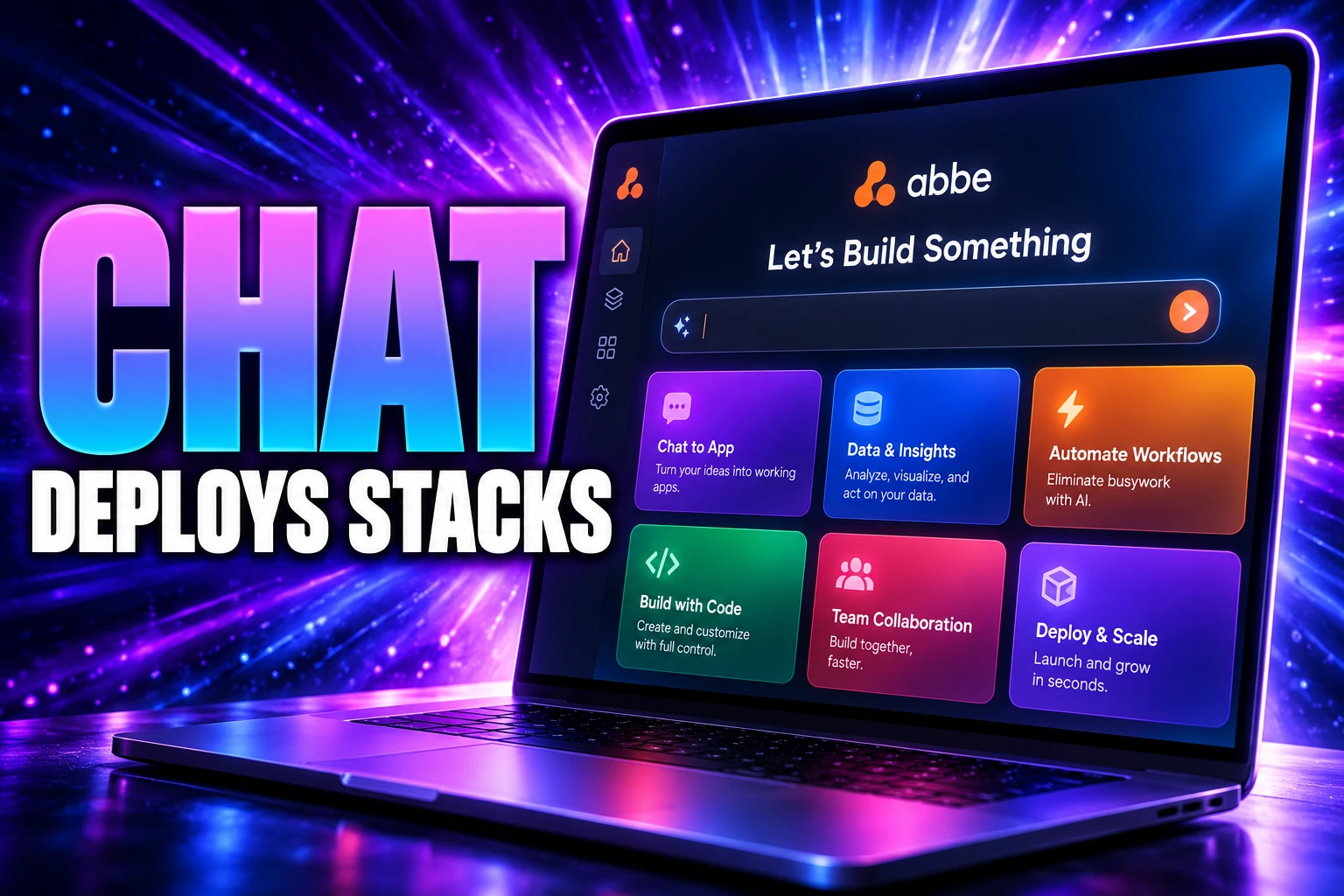
swXtch.io will premiere abbe, an AI-based broadcast engineer, at IBC in Amsterdam from September 11 to 14. The tool takes a spoken description of a live outcome and stands up the cloud, network, compute, and software to run it.
It places that work on Azure, Oracle Cloud Infrastructure, or AWS for cost and latency, without a separate design per cloud. The second effect is quieter than the booth copy: the scarce skill of wiring live media across clouds becomes a prompt, and the remaining risk sits with whoever accepts the SLA.
Abbe Builds the Live Stack From a Sentence
abbe is a cloud-agnostic orchestration layer, the company said. Operators no longer have to set up networks, cloud kit, compute, and AI software for media routing and interface jobs. They describe the outcome. The platform deploys what the workflow needs, in the cheapest layout that still hits the performance target.
Workloads land where the user asks, with cost and delay as the knobs. Television and radio are both in scope, and so are other live plants that look like broadcast once the packets start moving.
The AI models are becoming incredibly capable but putting them into a live production still requires expertise across networking, cloud infrastructure, and AI software. You describe what you want to accomplish, and abbe stands up everything needed to make it work. And because workflows are not locked to one model, you can easily optimize it as the technology changes.
Brent Yates, CEO, swXtch.io
Yates, a co-founder with 15+ patents in video and data transmission, is selling a separation: what the operator wants, versus the stack that used to take a specialist to assemble. abbe treats models as parts you can pick, test, chain, and swap. NVIDIA models sit under the first live AI features, and the company said it is adding more of that catalog over time.
Two Demos Share One Control Plane
The IBC cut is not a full plant. It is two jobs that still eat hours on a live day: moving the signal, and dropping AI into the path without standing up a private cloud team.
WHAT ABBE WILL SHOW IN AMSTERDAM
| Track | Operator input | What abbe deploys |
|---|---|---|
| Live transport | SRT ingest, watch, and global send | The network under the stream, including where the media should move when conditions change |
| Live AI audio | A described processing outcome | Cloud kit, networking, security, and software for NVIDIA models and named partners |
On the transport side, abbe is built to ingest, watch, and distribute SRT without a person drawing the paths. It is meant to choose where live media goes as the network shifts, which is the work that used to sit with a small group of IP-fluent engineers during a match or a breaking bulletin.
On the AI side, an operator names the audio job. abbe stands up the cloud, the network, the security, and the software. The company said this first pass is narrower than the product it wants later, when model choice is a routine swap rather than a project.
The Chat Interface Arrived at NAB First
abbe is a new name on a line the company already took to Las Vegas. In April it showed the swXtch AI Router under a swXtch.ai brand, billed as a chat-driven virtual broadcast engineer that teaches, designs, and deploys AI pipelines.
WHAT THE APRIL ROUTER ALREADY DID
- Live ingest: Pull video and audio from on-prem, edge, or cloud plants into the pipeline.
- Model calls: Invoke NVIDIA NIM microservices for live inference and other GPU models in one path.
- Mix and match: Combine in-house and third-party models, then compare them in the same pipeline.
- Known jobs: Active speaker detection, object detection, upscaling, and metadata, then send broadcast-ready outputs.
One worked example from that post is blunt. With NVIDIA’s Active Speaker Detection NIM, the router can demux audio from a live feed, tag channels for each speaker, and track those speakers in the frame, all from a prompt. An open marketplace sits in the middle so operators can score models on delay, accuracy, or cost without rebuilding the plant.
The same stack already leaned on NVIDIA Holoscan for Media, which the chipmaker describes as a way to bring real-time AI into live production. Paired with groundSwXtch at the edge, it was meant to ingest ST 2110 and hand the stream to the router, so a hybrid job could process on the ground, enrich in the cloud, and come back in time. Microsoft Fabric was already named as an enterprise-data hook. IBC is where that chat layer gets a job title and a multi-cloud placement engine.
Why Broadcast Teams Cannot Hire This Skill
The product name is not cute. Live plants spent a decade moving onto IP and cloud, and the people who can design that path are scarce. Scott Stiefel of Telos Alliance has said broadcasters want IT, cloud, and IP plants, and still lack a critical mass of staff who can run them. Grass Valley’s Adam Marshall has put it in plainer terms: a broadcast engineer now has to know ST 2110, compressed standards, and how packets actually traverse a configured, watched network.
THE U.S. TECHNICIAN BENCH
- Headcount: The BLS counted 136,600 broadcast, sound, and video technician jobs in 2025.
- Pay: Median pay for that group was $60,150 in 2025.
- Growth: The outlook for 2025 to 2035 is 1 percent, about 1,700 added jobs.
- Openings: About 9,800 openings a year, mostly to replace people who leave or retire.
That is a replacement market, not a hiring boom. The growth that does exist is in IP, multi-cloud routing, and low-delay design, which is exactly the work abbe claims it will take off the ticket. If the demo holds, a truck or a networked master control can describe a feed and a model chain instead of staffing a specialist for each cloud’s networking quirks.
The loss is not “the engineer vanishes.” The loss is the old bargaining chip: I am the person who knows how to make multicast, SRT, and GPU jobs coexist on a deadline. After abbe, that knowledge still matters when the prompt is wrong. It matters less as a daily configuration craft.
A Securities-Exchange Network Enters the Truck
swXtch.io did not start as a broadcast vendor. It was founded to hit the delay and loss limits of one of the world’s largest securities exchanges, a plant the company says handles nearly $25 billion in daily transactions and billions of messages. After 2.5 years of incubation it took cloudSwXtch, a software overlay that adds standards-based multicast to clouds that do not offer it natively, into media, industry, and defense. In 2025 it became an independent corporation. The U.S. office is in Atlanta.
cloudSwXtch is the reason the AI layer has something to steer. The overlay sits on the cloud network and turns on multicast, ST 2022-7 hitless merge, protocol fan-out, and packet-level watch points, with the company citing more than 100Gbps and 5 million packets per second. Microsoft’s Azure team asked for multicast on Azure; a November 2020 demo led to a marketplace listing the next spring. CEO Yates has said the point is to make the cloud look like the on-prem plant operators already know.
FROM OVERLAY TO JOB TITLE
- November 2020: cloudSwXtch is demoed for Azure Global Engineering as a multicast overlay.
- 2025: swXtch.io becomes an independent corporation after the 2.5-year incubation.
- April 2026: The AI Router ships as a virtual broadcast engineer at NAB, with NVIDIA NIM and Holoscan in the path.
- August 2026: Global SRT Distribution becomes a managed service, with native multicast transport beside it, priced from $41 a month for 24/7 linear in three tiers.
- September 11, 2026: IBC opens at RAI Amsterdam, and abbe takes the engineer’s title onto the show floor.
Geeter Kyrazis, a co-founder and 35-year media, software, and defense veteran, said live producers should not have to build a global network every time they need to send an SRT signal to another market. The August service already takes that work after the encoder. abbe is the same idea, pushed one layer up, so the person who used to design the overlay now asks for an outcome.
Compression house V-Nova, which launched a VC-6 multicast path with the AI Router at NAB, put the sharper point on September 8. Live video’s newest viewer is not a person, and the network still behaves as if it is. Formats built for human eyes force a full decode before a model can even look. That is the load abbe is being asked to place, not only the load it is being asked to hide.
Live video's newest viewer isn't human. The network still thinks it is.
In a joint Intel and V-Nova study, roughly 1.4% of decoded pixels were used for inference. V-Nova and swXtch are bringing VC-6 and abbe to rethink what gets sent. https://t.co/4RFZ3R3TIQ#IBC2026 #VideoTech pic.twitter.com/elX5HRxAtm— V-Nova Ltd (@VNovaVideo) September 8, 2026
Microsoft, Oracle, and NVIDIA Hold the Floor
abbe will not live on a lonely stand. The demo sits inside the clouds it claims to orchestrate, which is the distribution plan as much as the architecture. Visitors who want the conversational layer will find it where those vendors already pull live-media buyers.
WHERE TO SEE ABBE AT IBC
- Microsoft 14.A70: The abbe demo, on the Azure partner’s floor.
- Oracle 5.A21: A presentation that features abbe, next to OCI.
- NVIDIA 1.BS5: The GPU vendor’s booth, where the company said live processing with NVIDIA models and other partners will be discussed.
- Room 5.MR13: swXtch.io meetings in Hall 5, the same room listed for the SRT and multicast launch.
IBC runs at RAI Amsterdam, Europaplein 24, with doors at 10:30 on Friday and 09:30 through Sunday, then 09:30 to 16:00 on Monday. The show’s own programme is built around AI, cloud-native workflows, and a 600-plus speaker slate. NVIDIA is on site with Holoscan, NIM microservices, and a wider AI-for-media kit that already lists Active Speaker Detection, Studio Voice, lip sync, and RTX Video Super Resolution from 480p to 8K. abbe’s IBC audio demo is narrower than that catalog. The booth map still tells buyers where the inference will run.
For Microsoft, Oracle, and Amazon, a conversational overlay is a way to sell live production on clouds that never shipped native multicast. For NVIDIA, it is another path to put NIMs on a live feed without each broadcaster hiring a GPU pipeline team. swXtch.io keeps the overlay and the new control plane in the middle, which is the commercial bet under the friendly name.
The Prompt Does Not Own the Outage
If abbe does what the brief says, a live team can ask for a global SRT mesh or an audio model chain and get a running plant. The company also said it will pick the cheap region that still meets delay. That is the new failure mode. A wrong placement is no longer a junior engineer’s ACL. It is a model’s cost function, running during a match.
WHAT WE KNOW
- The IBC scope: SRT management and a live NVIDIA audio-processing workflow, shown as a world premiere in room 5.MR13 and at partner booths.
- The lineage: The April AI Router already used chat to ingest, call NIMs, and mix models, including active speaker detection.
- The network under it: cloudSwXtch remains the multicast overlay; Global SRT Distribution is already sold as a managed path from $41 a month.
WHAT IS UNCONFIRMED
- General availability: No public date, price, or support contract for abbe itself.
- Which models ship on the floor: “NVIDIA models and other select partners” is the IBC line, not a model list.
- Who is liable: The brief does not say who owns a bad placement, a dropped hitless pair, or a model swap that breaks lip sync on air.
Someone still has to write the prompt so it names the delay, the destinations, and the failover the show actually needs. Someone still has to watch the output when the economical region is the wrong side of an ocean. abbe can hide Azure, OCI, and AWS from the operator. It cannot hide a black screen.
The Microsoft booth is 14.A70. IBC opens September 11. That is where a job title becomes a deployable stack, and where the next outage report will have to say whether a person or a conversation picked the path.

Anker’s $94 MagSafe Dock Undercuts Apple on Prime Day

LG Will Sell the Apple-Designed Lock and Thermostat

Claude Asks to Keep Voice Recordings It Once Deleted

Jeep Bets One Grand Wagoneer Can Replace Two

Kortext Buys the Study Tool Already Inside Campus Software
How to Remove Sewn-In Tags – Techniques for Tag Removal from Clothing

Long Realty Drops Lundeen After the Flight 618 Arrest

Land Rover Pushes the Electric Defender Into the 2030s

Boox Picco Drops Phone Magnets for a Pocket Linux Reader

OPEC+ Holds October Oil Output After Six Paper Hikes
-
LIFESTYLE3 years ago
How to Remove Sewn-In Tags – Techniques for Tag Removal from Clothing
-
 BUSINESS1 month ago
Long Realty Drops Lundeen After the Flight 618 Arrest
-
 AUTO2 months ago
Land Rover Pushes the Electric Defender Into the 2030s
-
 NEWS1 month ago
Boox Picco Drops Phone Magnets for a Pocket Linux Reader
-
 BUSINESS1 month ago
OPEC+ Holds October Oil Output After Six Paper Hikes
-

 LIFESTYLE3 years ago
American Eagle Style Number on Tag – Decoding Clothing Label Information
-

 GAMING1 month ago
Kalshi Asks 11 Judges to Undo a Sports-Swap Split
-

 NEWS1 month ago
ChatGPT Images 2.5 Splits Image Work Into Two Speeds